
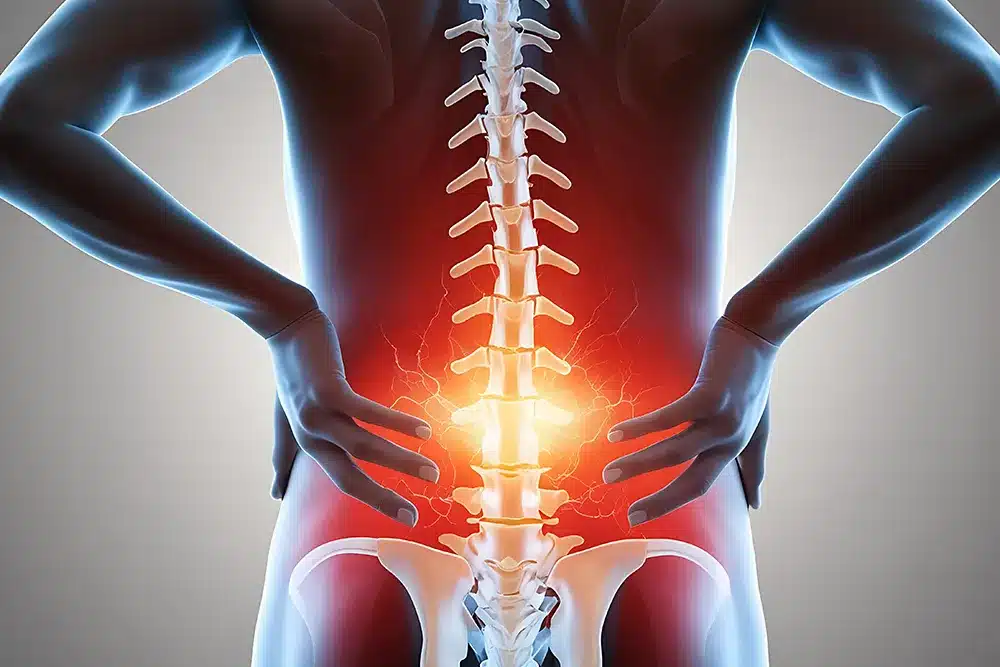
Lumbar radiculopathy treatment is designed to relieve pain, numbness, or weakness that develops when a nerve root in the lower spine is compressed or irritated. Treatment may involve non-surgical care, such as medication and physiotherapy, or surgery in more persistent cases. The goal is to restore comfort, improve mobility, and support daily function.
What Is Lumbar Radiculopathy Treatment?
Causes of Lumbar Radiculopathy
Lumbar radiculopathy may be linked to different spinal conditions, most of which involve changes that place pressure on the nerve roots in the lower back, and may require treatment.
Herniated Disc
A herniated or ‘slipped’ disc happens when the soft centre of a spinal disc pushes out through its tougher outer layer. This can press on nearby nerves and lead to pain, tingling, or weakness.
Degenerative Disc Disease and Spinal Stenosis
As spinal discs lose height and flexibility with age, the spaces between the vertebrae become narrower. This degeneration can lead to spinal stenosis, where the openings through which the nerves exit are reduced, placing pressure on the nerve roots.
Bone Spurs
Arthritic changes in the spine can cause extra bone to form, known as bone spurs. These growths may intrude into the nerve passageways and contribute to irritation or compression of the lumbar nerve roots.
Unstable Spine
In some cases, one vertebra slips forward over another, a condition called spondylolisthesis. This instability may compress nearby nerves and result in symptoms of lumbar radiculopathy.
Symptoms of Lumbar Radiculopathy
The symptoms of lumbar radiculopathy vary depending on the affected nerve but typically radiate from the lower back into the buttock, leg, or foot. These symptoms may be mild at first but can interfere with normal activities without the appropriate treatment.
Common signs include:
Persistent lower back pain that radiates down the leg.
Numbness or tingling in the buttock, thigh, or foot.
Muscle weakness in the leg or foot, sometimes affecting walking.
Sharp or shooting pain, often described as “sciatica.”
Symptoms that worsen with prolonged sitting, standing, or sudden movements.
Diagnosis of Lumbar Radiculopathy
Diagnosing lumbar radiculopathy requires a detailed assessment to identify the source of nerve compression. This process also helps guide the most appropriate treatment plan for each individual.
Medical History and Physical Examination
The doctor reviews symptoms, checks posture, and assesses reflexes, strength, and sensation in the legs.
Imaging Tests
- X-rays: X-rays are often the first step in evaluating lumbar radiculopathy. They can reveal structural changes in the bones of the spine, such as narrowing of the spaces between vertebrae or signs of arthritis.
- MRI Scans: MRI scans provide a detailed view of the spinal discs, nerves, and surrounding soft tissues. This imaging method is especially useful in identifying herniated discs, nerve compression, or inflammation that may not be visible on X-rays.
- CT Scans: CT scans may be recommended when additional detail is needed. They can offer cross-sectional images of the spine, helping to identify subtle changes or confirm findings from other imaging tests.
- Electrodiagnostic Studies: Tests such as electromyography (EMG) and nerve conduction studies are sometimes used to assess how well the nerves and muscles are working. These results can help confirm the presence and extent of lumbar radiculopathy.
Treatment Options for Lumbar Radiculopathy
Management of lumbar radiculopathy often begins with non-surgical treatments. However, surgery may be reserved for cases where symptoms persist or worsen.
Non-Surgical Treatment
- Rest and Activity Modification: Short periods of rest may reduce strain on the lower back. Prolonged inactivity is not recommended, as it can weaken muscles and delay recovery.
- Medications: Over-the-counter options such as acetaminophen or non-steroidal anti-inflammatory drugs (NSAIDs) can relieve pain and inflammation. In some cases, a short course of oral corticosteroids may be prescribed to ease swelling around the nerve root.
- Physical Therapy: Structured programmes include stretching, strengthening, and posture correction exercises are recommended. Gentle movements help relieve nerve compression while building core support for the spine. A physical therapist may also suggest adjustments to sitting, standing, or sleeping positions to reduce stress on the back.
- Lifestyle Measures: Maintaining a healthy weight reduces pressure on the spine. Practising proper ergonomics and avoiding heavy lifting without correct technique can lower the risk of flare-ups.
Surgical Treatment
- Discectomy or Microdiscectomy: The treatment involves removing part of a herniated disc that is pressing on the nerve root. It aims to relieve leg pain, numbness, or weakness caused by nerve compression.
- Laminectomy: Laminectomy involves removing part of the vertebra to widen the spinal canal. It is often used when spinal stenosis contributes to nerve irritation.
- Spinal Fusion: This treatment may be recommended when instability is present or when other procedures do not provide sufficient support. It joins two or more vertebrae together to stabilise the affected spinal segment.
- Minimally Invasive Techniques: In some cases, minimally invasive procedures like endoscopic discectomy or decompression can achieve similar goals as traditional open surgery. These techniques can be considered for selected cases of radiculopathy.
Prevention of Lumbar Radiculopathy
While not all cases can be prevented, certain measures may reduce the risk of lumbar radiculopathy. Besides medical treatment, consider taking these proactive steps to support long-term spinal health.
Maintain good posture when sitting, standing, and lifting.
Take regular breaks to move and stretch during prolonged sitting.
Strengthen core and back muscles through appropriate exercises.
Use safe lifting techniques to avoid sudden strain on the lower back.
Maintain a healthy body weight to reduce pressure on the spine.
Exercise for Lumbar Radiculopathy
Gentle, guided exercise plays an important role in recovering from lumbar radiculopathy, but it helps to first understand what’s causing your pain. Our guide on identifying the source of your back discomfort can help you tell whether your symptoms point to a muscular issue or a spine-related one before starting an exercise programme.
When to Seek Immediate Medical Attention
Seek immediate medical attention (call an ambulance or go to the nearest emergency department) if you experience sudden loss of bladder or bowel control, numbness in the saddle area (inner thighs, groin or buttocks), or rapidly worsening weakness in both legs. These can be signs of cauda equina syndrome, a rare but serious condition where nerve compression requires urgent surgical assessment, not a routine clinic appointment.

Wu Pang Hung
ABOUT AUTHOR
Dr. Wu Pang Hung is an experienced orthopaedic and spine surgeon in Singapore, specialising in both uniportal and biportal endoscopic spine procedures for complex cervical, thoracic, and lumbar spinal conditions. With over 10 years in the field, he is actively involved in numerous spine societies and contributes to several international journals and textbooks. Dr. Wu has also received specialised training in spine surgery across Canada, South Korea, Japan, and Germany.
Contact Us
WHATSAPP US @+65 9746 6178
CALL US @+65 9746 6178
MAKE AN APPOINTMENT
Frequently Asked Questions
How long does recovery from lumbar radiculopathy treatment take?
Recovery varies depending on the severity of symptoms and the type of treatment. Many people improve within a few weeks using non-surgical care, while surgical recovery may take several months with rehabilitation.
Is surgery always required for lumbar radiculopathy?
No, most patients respond well to non-surgical options such as medication, physical therapy, and exercise. Surgery is considered only if these treatments do not provide relief or if symptoms worsen.
What exercises help with lumbar radiculopathy?
Gentle stretching, core strengthening, and low-impact activities such as walking are often recommended. A physical therapy can reduce symptoms and improve mobility safely.
Can lumbar radiculopathy go away on its own?
In many cases, symptoms may improve over time without surgery. However, medical assessment is important to ensure that underlying causes such as herniated discs or spinal stenosis are managed appropriately.
What are the common causes of lumbar radiculopathy?
Herniated discs, degenerative disc disease, bone spurs, and spinal stenosis are among the most frequent causes. These conditions narrow the spaces in the spine and place pressure on nerve roots, leading to symptoms.