

Key Takeaways
- Cervical osteophytes are bony growths that form along the vertebrae in the neck.
- They often develop due to ageing, cervical spine degeneration, or arthritis.
- Symptoms may include stiffness, pain, and, in some cases, nerve compression in the neck.
- Many cases are managed conservatively, but surgical procedures such as cervical spine decompression may be considered if symptoms persist.
Introduction

Neck stiffness and discomfort are often attributed to modern lifestyle factors like prolonged screen time or poor posture. While these habits certainly play a role, the underlying cause is not always so straightforward. In some cases, the issue may be related to changes within the spine itself. Cervical osteophytes are one such condition.
In this article, we take a closer look at what they are, the signs to watch out for, and when it may be necessary to seek treatment.
What Are Cervical Osteophytes?
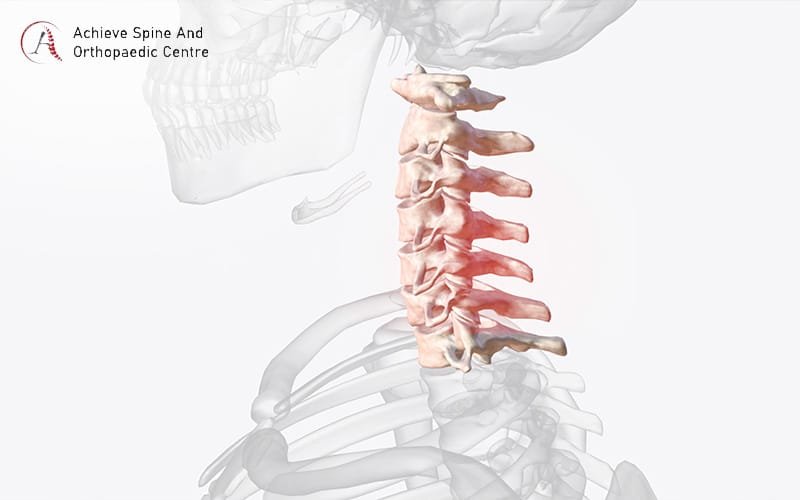
Osteophytes are bony outgrowths that develop along the edges of joints or bones. They are the result of the body’s natural response to wear and tear, instability, or ageing. When cartilage gradually breaks down, whether due to arthritis, repeated stress, or degeneration, the body attempts to protect and stabilise the area by forming extra bone. They are also most common in individuals over the age of 50.
When these outgrowths occur along the vertebrae in the neck, they are referred to as cervical osteophytes. Since the cervical spine is responsible for supporting head movement and flexibility, bone spurs in this region can sometimes contribute to stiffness and even pain if they press on surrounding structures.
Symptoms You Might Notice
Not everyone with neck osteophytes will experience symptoms. In fact, many are discovered incidentally on X-rays or scans performed for other reasons. However, when symptoms do occur, they may include:
- Neck stiffness and reduced mobility
- Localised neck pain that worsens with movement or radiates to the shoulders and arms
- Neurological signs, like tingling, numbness, or weakness in the arms or hands
- Difficulty swallowing
In more advanced cases, spinal cord deformation may occur if the bone spurs encroach into the spinal canal. This can lead to more significant neurological issues and requires careful, professional assessment.
Do Bone Spurs in the Neck Always Require Treatment?
Not all cases of spinal osteophytes require medical intervention. For many, simple strategies can help manage discomfort:
- Lifestyle adjustments: Improving posture, staying active, and avoiding prolonged neck strain
- Physiotherapy: Exercises that strengthen surrounding muscles and improve mobility
- Medication: To manage pain or inflammation when symptoms flare up
If conservative measures do not provide relief, or if there are signs of nerve compression, surgical treatment may be recommended. An osteophytectomy, for example, involves removing the bony growths that are pressing against nearby nerves or the spinal cord.
In specific cases, an osteophytectomy may be combined with other procedures like an anterior cervical discectomy and fusion (ACDF). This involves removing a damaged or degenerated disc in the neck and then stabilising the spine by fusing the adjacent vertebrae. This combination may be considered when both disc degeneration and osteophytes are contributing to nerve compression.
For suitable patients, there are also motion-preserving alternatives to ACDF. These include cervical disc replacement, which maintains movement at the affected spinal level, and posterior endoscopic cervical foraminotomy, which relieves nerve compression without fusion. These options may be considered depending on the location of compression, spinal stability, and overall clinical findings.
Today, the availability of minimally invasive spine surgery in Singapore allows some of these procedures to be performed using smaller incisions and less tissue disruption. This approach is suitable for individuals who require surgical treatment but also wish to minimise downtime and return to their daily routines more quickly.
Conclusion: When It’s More Than Just Stiffness
Neck pain and stiffness should not always be dismissed as everyday strain. Cervical osteophytes, though common, can sometimes lead to further complications if left unaddressed. Once you start experiencing symptoms that interfere with daily activities, it’s time to seek help from a professional spine specialist in Singapore.
At Achieve Spine and Orthopaedic Centre, we provide thorough assessments to understand your condition and recommend treatment tailored to your needs. Our focus includes minimally invasive options where appropriate, helping you manage symptoms with less disruption to your daily life. Take early action—get in touch with our specialists today.

Wu Pang Hung
ABOUT AUTHOR
Dr. Wu Pang Hung is an experienced orthopaedic and spine surgeon in Singapore, specialising in both uniportal and biportal endoscopic spine procedures for complex cervical, thoracic, and lumbar spinal conditions. With over 10 years in the field, he is actively involved in numerous spine societies and contributes to several international journals and textbooks. Dr. Wu has also received specialised training in spine surgery across Canada, South Korea, Japan, and Germany.
Contact Us
WHATSAPP US @+65 9746 6178
CALL US @+65 9746 6178
MAKE AN APPOINTMENT