

Key Takeaways
- Prioritise spinal alignment to reduce pain and aid recovery when sleeping with a herniated disc.
- Avoid sleeping on your stomach, invest in the right bedding, and incorporate pain-relief strategies into your bedtime routine.
- For persistent cases, minimally invasive procedures may be considered for herniated disc treatment in Singapore.
The Dos and Don’ts of Sleeping with a Herniated Disc

Sleeping with a herniated disc can be challenging, especially when pain seems to intensify at night. The position you rest in, along with your sleep environment, plays a direct role in how well your spine recovers. By making a few mindful adjustments, you can ease the strain on your back and improve the quality of your rest.
Do: Maintain Spinal Alignment
The best sleeping position for someone with a herniated disc is one that keeps the spine in a neutral, well-aligned posture. Lying on your back with a small pillow under your knees helps reduce pressure on the lower back and supports the natural curve of the spine. If you prefer to sleep on your side, place a firm pillow between your knees to prevent your hips from rotating. These adjustments promote proper spinal alignment during your sleep and can ease pressure on the affected disc.
Don’t: Sleep on Your Stomach
On the other hand, sleeping on your stomach is generally not recommended, particularly when dealing with a herniated disc. This position forces your neck to twist to one side for breathing, placing considerable strain on your cervical spine. At the same time, it can cause your lower back to arch excessively, increasing pressure on the lumbar discs. This can hinder the recovery process and cause more pain.
Do: Choose Supportive Bedding
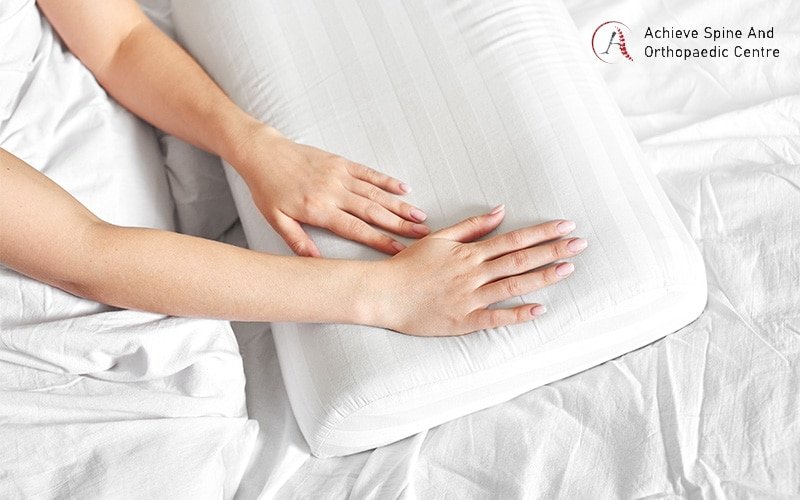
The quality of your bedding is crucial when sleeping with a herniated disc. A medium-firm mattress is often recommended, as it provides adequate support to maintain the natural curves of your spine without being too rigid or too soft. Similarly, selecting a pillow that supports the natural curve of your neck is essential. The right pillow should fill the gap between your head and shoulders, preventing your neck from bending at an awkward angle. Choosing the right mattress and pillow can help reduce unnecessary strain on your spine, making it easier to rest comfortably and wake with less stiffness.
Don’t: Ignore Pre-Bedtime Pain Relief
Simple bedtime routines can help ease discomfort and prepare your body for sleep. Gentle stretches, a warm shower, or prescribed pain management can help relax tight muscles and ease stiffness. These simple habits make it easier to find a comfortable position, allowing you to sleep without aggravating symptoms.
Do: Seek Medical Advice if Pain Persists
If sleeping with a herniated disc remains difficult despite making lifestyle adjustments, it may be time to seek medical advice. Ongoing nighttime pain or disrupted rest could signal that additional treatment is necessary. In Singapore, treatment options include conservative approaches, such as physiotherapy, with surgical procedures considered if symptoms fail to improve.
Why Minimally Invasive Surgery Can Help With Herniated Disc Recovery
If disc herniation continues to affect daily life and sleep, minimally invasive procedures such as endoscopic discectomy may be recommended. This procedure involves inserting a small tubular device and a specialised camera through a tiny incision, allowing the surgeon to view and remove the portion of the disc pressing on the nerves. This directly addresses the source of nerve compression while minimising damage to surrounding tissue, supporting a shorter recovery period and an earlier return to normal activities.
How Achieve Spine and Orthopaedic Centre Can Help
If you are suffering from a herniated disc, don’t let the pain compromise your quality of life. At Achieve Spine and Orthopaedic Centre, we specialise in minimally invasive procedures for various spine conditions, including herniated discs, nerve compression, spinal deformations, and more. Reach out to us today to schedule a comprehensive assessment.

Wu Pang Hung
ABOUT AUTHOR
Dr. Wu Pang Hung is an experienced orthopaedic and spine surgeon in Singapore, specialising in both uniportal and biportal endoscopic spine procedures for complex cervical, thoracic, and lumbar spinal conditions. With over 10 years in the field, he is actively involved in numerous spine societies and contributes to several international journals and textbooks. Dr. Wu has also received specialised training in spine surgery across Canada, South Korea, Japan, and Germany.
Contact Us
WHATSAPP US @+65 9746 6178
CALL US @+65 9746 6178
MAKE AN APPOINTMENT